
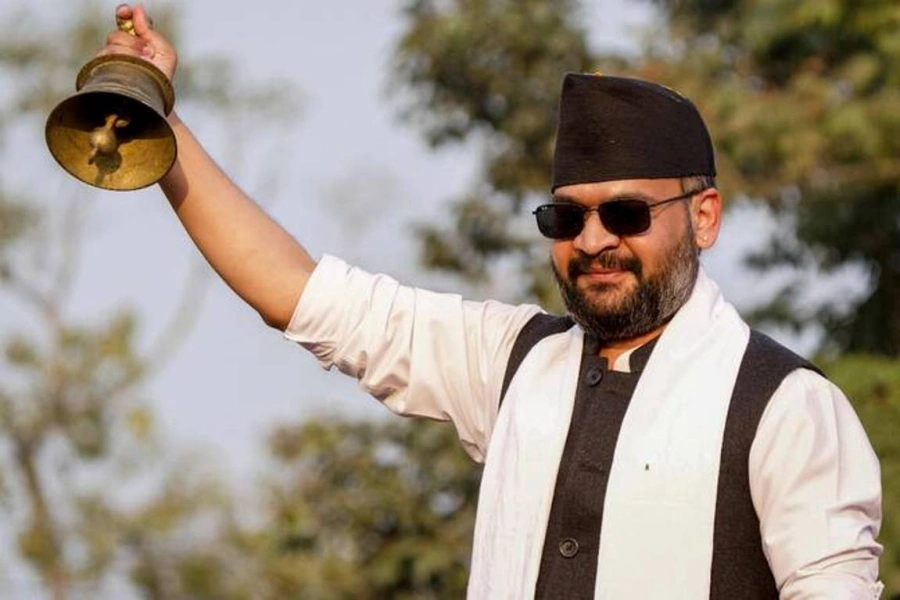
The political rise of Balendra Shah, popularly known as Balen, represents one of the most unconventional and compelling leadership stories in modern South Asian politics. A rapper-turned-politician, his journey from underground music scenes to the highest executive office in Nepal reflects a broader transformation in the country’s political culture, driven by youth activism, frustration with traditional elites, and a desire for systemic change.
From rap battles to political battles
Born in 1990 in Naradevi, Kathmandu, Balen Shah grew up in a middle-class family. His father worked as an Ayurvedic practitioner while his mother managed the household. Academically inclined, Shah pursued engineering studies in Kathmandu and later in Karnataka, India.
However, his early fame came not from academics but from music. In 2013, he rose to prominence after winning a major rap battle in Nepal. His lyrical style was sharp, critical, and unapologetically political. Through tracks like Balidan, he voiced the frustrations of a generation disillusioned by corruption, inequality, and lack of opportunity.
His music was more than entertainment, it was activism. Songs criticising government inefficiency and social injustice resonated deeply with Nepali youth, establishing him as a voice of dissent long before he entered politics.
Entry into politics: Kathmandu mayor
Balen Shah’s transition into politics began in 2022 when he ran as an independent candidate for mayor of Kathmandu. In a political landscape dominated by established parties, his landslide victory shocked the nation.
As mayor, his governance style was assertive and results-driven. His tenure focused on:
- Urban cleanliness and infrastructure improvement
- Preservation of indigenous heritage
- Anti-corruption initiatives
- Removal of illegal constructions to ease traffic congestion
While many praised his efficiency and boldness, critics pointed to controversial decisions especially the demolition of informal settlements and strict actions against street vendors. These actions raised concerns among organisations like Human Rights Watch regarding the balance between development and human rights.
The rise to Prime Minister
Following youth-led protests in Nepal sparked by social media restrictions but fuelled by deeper issues such as unemployment, corruption, and economic stagnation-Balen Shah’s message gained even more traction.
His song Nepal Haseko (Smiling Nepal) became an anthem of hope during the protests. It symbolized a vision of a united and prosperous nation, aligning perfectly with the aspirations of young citizens.
In the subsequent general elections, Shah aligned with the Rastriya Swatantra Party (RSP), a relatively new political force. Running as its prime-ministerial candidate, he achieved a decisive victory, defeating established leaders including KP Sharma Oli in his stronghold constituency.
At just 35 years old, Balen Shah was sworn in as Nepal’s Prime Minister, marking a historic shift from traditional political dynasties to a new, youth-driven leadership model.
A new political style
Unlike conventional politicians, Shah avoided traditional campaign strategies:
- He limited mainstream media appearances
- He communicated directly through social media
- He used music and digital platforms to connect with voters
His campaign focused on bold promises:
- Eliminating corruption
- Reforming the judiciary
- Creating 1.2 million jobs
- Breaking entrenched political networks
This unconventional approach appealed particularly to younger voters, who saw him as authentic, independent, and untainted by legacy politics.
Controversies and criticism
Despite his popularity, Shah’s journey has not been without controversy.
Governance concerns
His tenure as mayor drew criticism for heavy-handed enforcement tactics, especially toward marginalized groups like street vendors. Rights organizations urged him to adopt a more balanced, rules-based governance approach.
Social media incidents
Shah has also faced backlash for controversial social media posts, including one criticising multiple international powers and domestic political entities. Though later deleted, such actions raised questions about his diplomatic temperament.
Political inexperience
Critics argue that both Shah and the RSP lack the institutional experience required to govern effectively at the national level.
Challenges ahead
As Prime Minister, Balen Shah faces immense expectations. His leadership will be tested by:
- Economic recovery and job creation
- Managing public debt and migration issues
- Institutional reforms in governance and judiciary
- Balancing development with social justice
- Maintaining political stability in a fragmented system
The biggest challenge may not be gaining power, but sustaining trust while delivering tangible results.
Symbol of a generational shift
Balen Shah’s rise is more than a personal success story, it is a reflection of a broader societal transformation in Nepal. His journey symbolises:
- The growing political influence of youth
- The power of digital communication and grassroots movements
- A rejection of traditional elite-dominated politics
For many, he represents hope. For others, he is an untested experiment.
Balen Shah’s evolution from rapper to Prime Minister is both extraordinary and emblematic of changing political dynamics in Nepal. His leadership carries the promise of reform, but also the burden of high expectations.
Whether he succeeds or struggles, one thing is certain: his rise has already reshaped the political narrative of Nepal and inspired a new generation to believe that change is possible.
https://shorturl.fm/PDtUO