
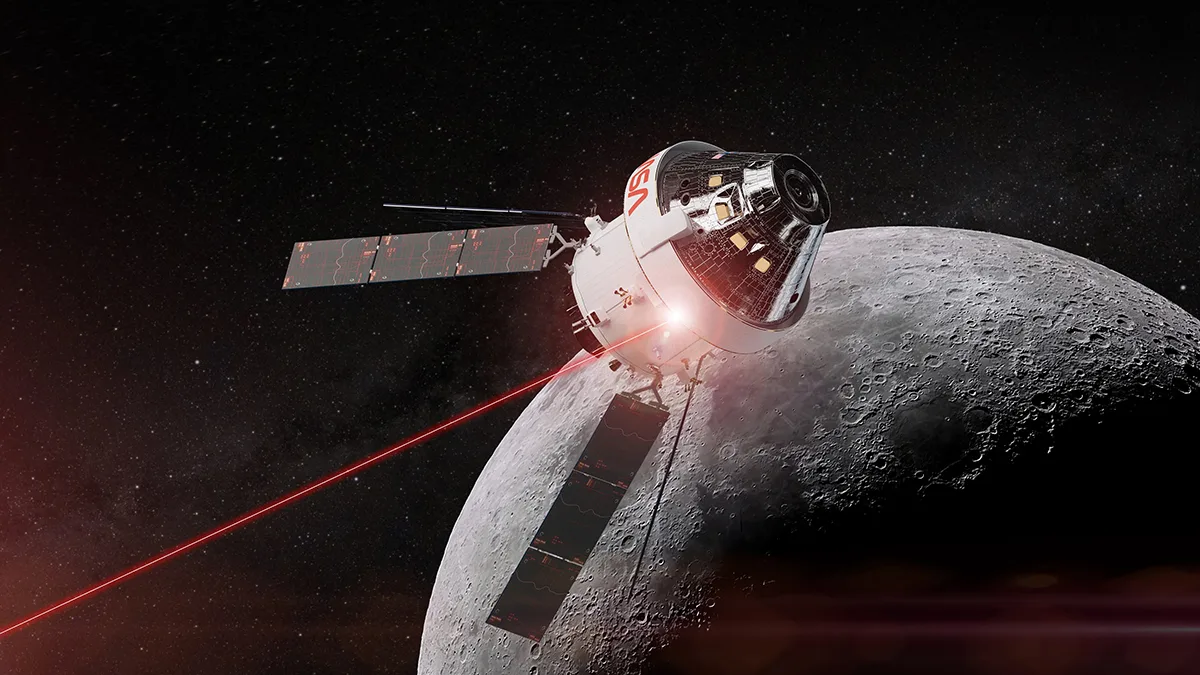
More than 50 years after humans last travelled to lunar orbit, Artemis II is poised to redefine the trajectory of human space exploration. Led by NASA, this mission marks the first crewed journey around the Moon since the Apollo era and represents a critical systems validation step before astronauts return to walk on the lunar surface.
However, as with any complex human spaceflight campaign, Artemis II has encountered schedule adjustments. NASA initially targeted 6 March for launch but withdrew that date after detecting a technical fault. Within 24 hours of setting the March target, the agency declared a March launch “out of consideration,” reinforcing its long-standing safety-first doctrine.
Launch timeline and Technical delays
With March no longer feasible, new launch opportunities fall on April 1, 3, 4, 5, and 6. These dates are not arbitrary. Lunar missions depend on precise orbital mechanics. Mission planners must align the spacecraft’s trajectory with the Moon’s position in its orbit. As a result, Artemis II has a launch window of roughly one week at the beginning of each month, followed by about three weeks with no viable opportunity.
A February launch had already been ruled out after a pre-flight “wet dress rehearsal” was discontinued due to a hydrogen fuel leak at an umbilical connection linking the launch tower to the rocket. Such rehearsals simulate fuelling and countdown procedures to uncover anomalies before flight. While setbacks can delay timelines, they are integral to risk mitigation in crewed exploration.
Mission Overview: What Artemis II will do?
Artemis II will last approximately 10 days and could carry astronauts farther into space than any humans have traveled before. The mission will test the first crewed flight of NASA’s Space Launch System (SLS) rocket and the Orion spacecraft.
Once in Earth orbit, the crew will manually pilot Orion to evaluate its handling characteristics. This includes practicing spacecraft steering, alignment maneuvers, and operational procedures essential for future lunar landing missions.
The spacecraft will then travel thousands of kilometers beyond the Moon, placing Orion in a deep-space environment where life-support, propulsion, power, and navigation systems will be rigorously tested. The astronauts will also serve as medical research participants, transmitting physiological data to help engineers understand human adaptation to deep-space radiation and weightlessness.
Unlike the International Space Station, which operates in low Earth orbit, Artemis II astronauts will encounter higher radiation levels. These remain within established safety thresholds but provide critical data for planning longer missions.
Upon return, Orion will re-enter Earth’s atmosphere at high velocity before splashing down in the Pacific Ocean off the west coast of the United States.
Will Artemis II land on the Moon?
No. Artemis II is strictly an orbital mission designed to validate systems before a surface landing. That responsibility falls to Artemis III, which NASA aims to launch by 2028-though many analysts consider that timeline ambitious.
Artemis III will send astronauts to the Moon’s south pole, a scientifically valuable region believed to contain water ice. The final lunar lander selection is still pending. Candidates include SpaceX’s Starship Human Landing System and a lander developed by Blue Origin. Additionally, new-generation lunar spacesuits developed by Axiom Space are still undergoing preparation.
The Artemis II Crew
The four-person crew embodies experience, technical expertise, and international cooperation:
- Reid Wiseman – Commander
- Victor Glover – Pilot
- Christina Koch – Mission Specialist
- Jeremy Hansen – Mission Specialist
Wiseman, a U.S. Navy veteran and former ISS flight engineer, brings operational leadership experience. Glover previously piloted SpaceX Crew-1 and contributes deep aerospace expertise. Koch holds the record for the longest single spaceflight by a woman and participated in the first all-female spacewalk. Hansen, representing the Canadian Space Agency, will become the first Canadian to travel to the Moon.
Historical Context: The Legacy of Apollo
The last crewed lunar mission was Apollo 17, which landed in December 1972. In total, 24 astronauts traveled to the Moon during the Apollo program, and 12 walked on its surface. The Apollo missions were driven largely by Cold War competition with the Soviet Union. Once geopolitical objectives were achieved, funding and public enthusiasm waned.
Artemis II differs fundamentally in purpose. Rather than a short-term geopolitical demonstration, it is part of a long-term strategy focused on sustained lunar presence, technological innovation, and commercial partnerships.
Building toward a lunar infrastructure
Following Artemis III, Artemis IV and V will begin assembling Gateway, a small lunar-orbiting space station designed to support extended missions. Additional surface landings, robotic rovers, and infrastructure modules will follow. The objective is to establish a durable human presence on and around the Moon.
Global lunar ambitions
The new lunar era is not limited to the United States. European astronauts and Japanese astronauts are scheduled to participate in future Artemis missions. China is targeting a crewed lunar landing near the Moon’s south pole by 2030. Russia has discussed potential missions in the early 2030s, though financial and technical constraints create uncertainty. India, following the success of its Chandrayaan-3 south pole landing, has expressed ambitions to send astronauts to the Moon by around 2040.
Conclusion
Artemis II is more than a mission-it is a systems validation milestone bridging Apollo’s legacy and a new era of sustainable lunar exploration. Despite technical delays and shifting launch windows, its strategic importance remains unchanged. By testing the Space Launch System(SLS) rocket, Orion spacecraft, crew operations, and deep-space systems, Artemis II lays the operational foundation for humanity’s long-term return to the Moon and eventually, Mars.
As launch preparations continue, Artemis II stands as a defining moment in the future of human spaceflight.