
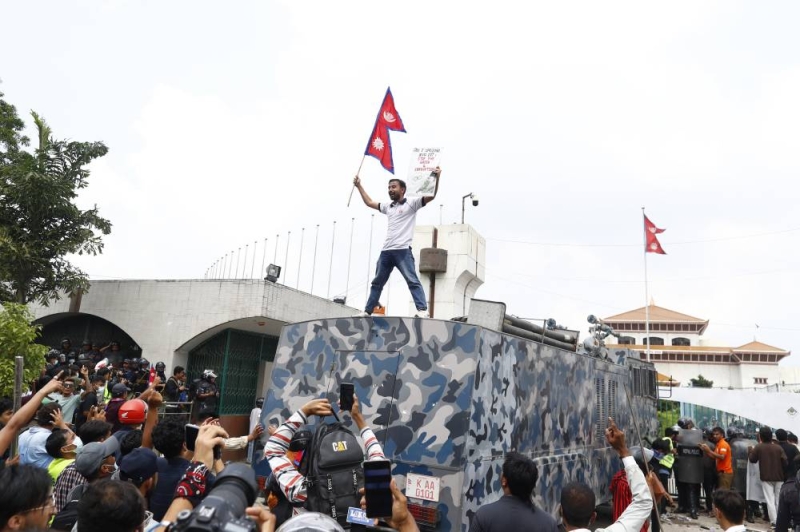
Youth-led movements are reshaping political conversations across the world, and Nepal is no exception. The BBC documentary ‘Shot Like Enemies’ brings international attention to Nepal’s emerging wave of youth activism, presenting a powerful narrative of protests driven by Generation Z. Shot like Enemies: BBC documentary on Nepal’s Gen-Z protest explores how young Nepalis are challenging authority, demanding accountability, and confronting the realities of state response during public demonstrations.
The documentary goes beyond headlines, offering an intimate and sometimes unsettling portrayal of how peaceful protestors can suddenly find themselves treated as threats rather than citizens exercising democratic rights.
Rise of Nepal’s Gen-Z protest movement
Nepal’s Gen-Z has grown up during political transformation following the country’s shift toward a federal democratic republic. Despite democratic promises, many young citizens feel disconnected from decision-making processes and frustrated by persistent socio-economic challenges.
Shot like Enemies: BBC documentary on Nepal’s Gen-Z protest highlights several underlying causes behind the protests:
- Rising youth unemployment and migration pressures
- Public dissatisfaction with governance and corruption allegations
- Limited opportunities for young graduates
- Lack of youth representation in political leadership
- Increasing awareness through global digital culture
Unlike traditional political rallies organized by parties, these protests are largely youth-initiated and digitally coordinated, signaling a structural shift in civic participation.
Why the documentary is titled “Shot Like Enemies”?
The title itself carries strong symbolic meaning. In Shot like Enemies: BBC documentary on Nepal’s Gen-Z protest, the phrase reflects how protesters describe their experience during demonstrations feeling treated as adversaries rather than members of a democratic society.
Through eyewitness footage and interviews, the documentary examines moments where tensions escalated between protestors and security forces. It raises critical questions about:
- proportional use of force,
- crowd control strategies,
- freedom of expression, and
- the boundaries between public security and civil rights.
Rather than presenting a one-sided narrative, BBC frames the issue within broader debates about maintaining order while protecting democratic freedoms.
Storytelling approach and cinematic style
One of the documentary’s strengths lies in its immersive storytelling. BBC employs a ground-level perspective, allowing viewers to experience protests almost in real time.
Key filmmaking elements include:
- handheld camera footage capturing protest energy,
- direct interviews with young activists,
- observational scenes showing police presence,
- emotional testimonies from participants and witnesses.
This approach creates a sense of immediacy and authenticity, making audiences feel present within unfolding events rather than watching distant news coverage.
Role of social media in youth mobilisation
A major theme throughout Shot like Enemies: BBC documentary on Nepal’s Gen-Z protest is the role of social media as a mobilising force.
Gen-Z activists rely heavily on digital platforms to:
- organize demonstrations quickly,
- share live updates,
- document encounters with authorities,
- shape public narratives beyond traditional media.
The documentary illustrates how smartphones have become tools of both activism and accountability, enabling young protestors to record and distribute their experiences globally within minutes.
Voices of a generation
BBC places strong emphasis on personal stories. Students, young professionals, and first-time activists explain their motivations for joining protests. Many participants express similar concerns:
- uncertainty about future employment,
- frustration with political stagnation,
- desire for transparency and reform,
- hope for a more inclusive Nepal.
These testimonies reveal that the protests are not merely political events but emotional expressions of generational anxiety and aspiration.
State response and democratic debate
The documentary also explores the perspective of authorities responsible for maintaining public safety. Officials emphasize challenges such as crowd management, public security risks, and preventing unrest.
By presenting multiple viewpoints, the film encourages viewers to consider a complex question:
How should democratic governments respond when youth movements challenge existing systems?
This balanced portrayal strengthens the documentary’s credibility and sparks broader discussions about governance and civil liberties.
International attention and global relevance
Although focused on Nepal, the documentary resonates globally. Around the world, Gen-Z movements have emerged demanding climate action, political reform, and social justice. Nepal’s protests reflect similar patterns — digitally connected youth questioning established institutions.
Through BBC’s global platform, Nepal’s youth voices reach international audiences, placing the country within wider conversations about modern activism and democratic accountability.
Impact and public discussion
Since its release, Shot Like Enemies has encouraged debate among viewers, journalists, and policymakers. The documentary has contributed to discussions about:
- policing methods during protests,
- youth participation in governance,
- media representation of demonstrations,
- the evolving nature of activism in South Asia.
It serves as both documentation and dialogue recording events while encouraging reflection on future democratic practices.
Why this documentary matters?
Shot like Enemies: BBC documentary on Nepal’s Gen-Z protest is important because it captures a generational turning point. It highlights how young citizens are redefining political engagement using digital tools, collective action, and global awareness.
The documentary reminds audiences that protests are not isolated incidents but indicators of deeper societal transformation. By focusing on human stories rather than political slogans, BBC presents a nuanced understanding of Nepal’s evolving democracy.
Conclusion
A Documentary on Nepal’s Gen-Z Protest by BBC: Shot Like Enemies stands as a powerful exploration of youth activism, state response, and democratic tension. It portrays a generation unwilling to remain passive about its future and determined to demand accountability through civic action.
As shown throughout Shot like Enemies: BBC documentary on Nepal’s Gen-Z protest, Nepal’s Gen-Z is shaping a new political narrative one driven by awareness, connectivity, and a strong desire for change. Whether these movements translate into lasting reforms remains uncertain, but their influence on Nepal’s social and political landscape is already significant.